Cracks in Walls: When Should You Be Concerned?
Discovering a crack in a wall can understandably cause concern, particularly when stories about subsidence and property movement are making the headlines. However, cracks in walls do not automatically mean there is a serious structural problem.
Cracking can occur for many reasons. Some cracks are a normal part of a building settling and responding to changes in temperature and moisture, while others may indicate movement that warrants further investigation.
The important thing is not simply that a crack has appeared, but understanding why it has appeared and whether it is changing.
Why do cracks appear in walls?
Buildings are not completely static. Construction materials naturally expand and contract in response to changes in temperature and moisture, and a certain amount of movement can occur throughout the life of a property.
Common causes of cracking can include:
- Natural settlement in newer properties
- Expansion and contraction of building materials
- Changes in temperature and moisture levels
- Shrinkage of plaster
- Movement around doors and windows
- Alterations or extensions to a property
- Issues with drainage or nearby trees
- Movement within the ground beneath the property
Many of these causes do not necessarily indicate a significant structural issue.
Does a crack mean subsidence?
No. While cracking can be one of the signs associated with subsidence, the presence of a crack alone is not enough to determine that a property is suffering from it.
Subsidence occurs when the ground supporting part of a building moves downwards, potentially causing the foundations and the structure above to move.
Hot and prolonged periods of dry weather can increase concerns about ground movement, particularly in areas with shrinkable clay soils. Trees and vegetation can also influence soil moisture levels.
However, cracks can develop for numerous other reasons, which is why it is important not to immediately assume the worst.
What types of cracks should you look out for?
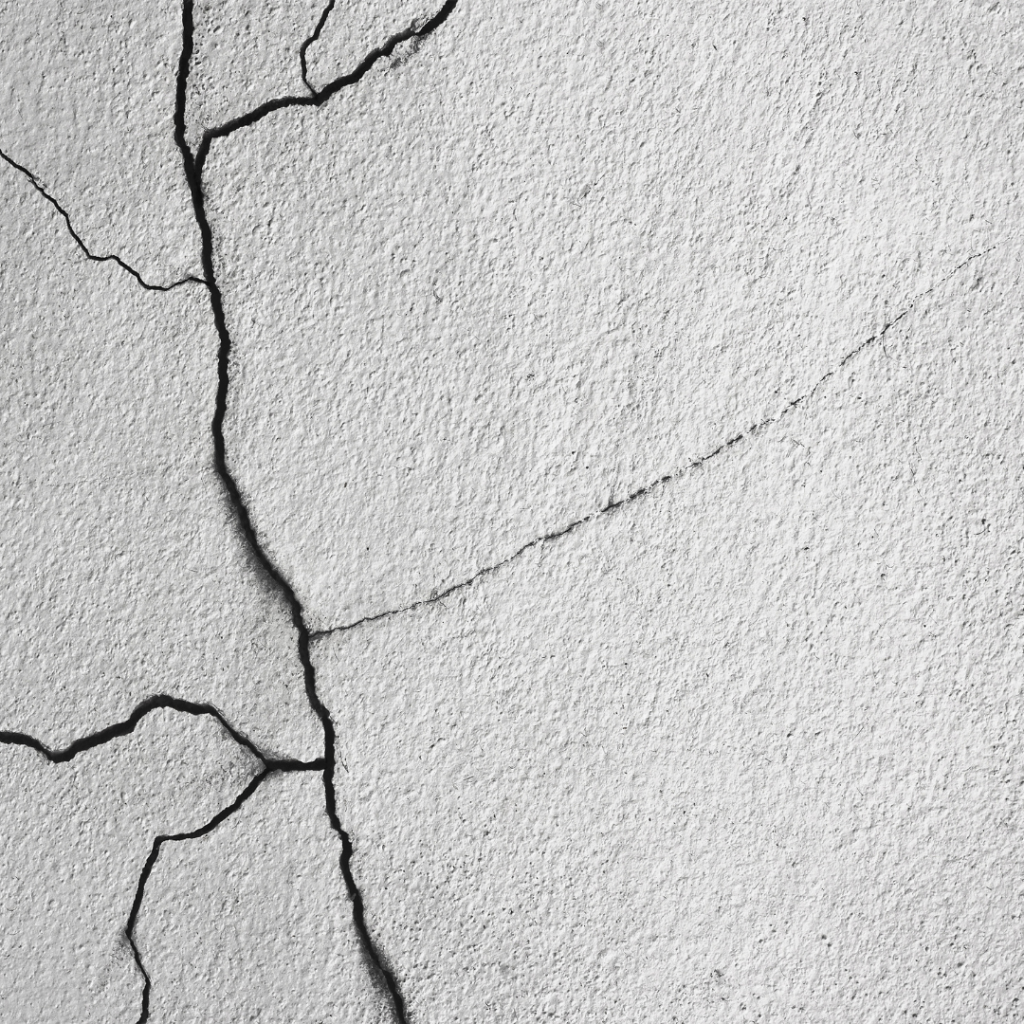
There is no single type of crack that automatically confirms a structural problem, but there are certain characteristics that may warrant closer attention.
These can include cracks that:
- Appear suddenly or are noticeably getting wider
- Are wider at one end than the other
- Run diagonally from the corners of doors or windows
- Are visible both internally and externally
- Extend through brickwork rather than simply the plaster
- Reappear after being repaired
- Are accompanied by doors or windows suddenly becoming difficult to open or close
The location, direction, width and progression of a crack can all provide useful information when investigating its potential cause.
What about small hairline cracks?
Fine cracks in plaster are extremely common and are often cosmetic rather than structural.
They can occur as plaster dries, through minor thermal movement or as different building materials expand and contract at slightly different rates.
Cracking can also occur where walls meet ceilings or around joints between different materials.
If a crack is very fine, remains stable and there are no other signs of movement, there may be little cause for concern. However, it is still sensible to keep an eye on it and look for any changes.
Can cracks change with the seasons?
Yes. Buildings and the ground beneath them can respond to seasonal changes.
During hot, dry periods, certain soils can lose moisture and shrink. When wetter weather returns, moisture levels can increase again.
Building materials themselves also respond to changes in temperature and humidity, expanding and contracting throughout the year.
This means some movement can be seasonal rather than progressive.
If you have noticed cracking following a particularly dry summer, monitoring whether it changes over the following months can provide useful information.
Older properties can behave differently
Sussex has a wide variety of older and period properties, and these buildings can behave differently from modern homes.
Traditional properties may have been constructed using materials such as lime mortar and solid masonry walls, which were designed to accommodate a certain amount of movement and manage moisture differently from many modern construction methods.
Cracks in an older property therefore need to be considered in the context of the building’s age, construction, previous alterations and overall condition.
Applying a modern repair without understanding the original construction can sometimes create further problems, which is why identifying the cause should come before deciding on the solution.
Should you simply fill and redecorate over a crack?
If the cracking is purely cosmetic, repairing and redecorating may be appropriate.
However, repeatedly filling a crack without understanding why it keeps appearing may simply hide the symptom temporarily.
If there is an underlying cause, the crack may return.
The same principle applies to many property defects: identify the cause before deciding on the remedy.
When should you seek professional advice?
If you notice a new crack, don’t panic. Take a photograph with a ruler or tape measure alongside the crack for scale, and make a note of when you first noticed it. Taking further photographs in the same way can also help show whether the crack is changing in width over time. This can make it easier to determine whether anything changes over time.
You may want to seek professional advice if the crack is becoming wider, continues to return following repair, appears in several areas, passes through masonry or is accompanied by other changes to the property.
A Chartered Surveyor can assess the cracking in the context of the whole building rather than looking at the crack in isolation.
This can include considering the property’s construction, age, ground conditions, drainage, surrounding vegetation, previous alterations and other visible signs of movement.
Further specialist investigation or monitoring may sometimes be recommended before a firm conclusion can be reached.
Concerned about cracks in your property?
Cracks can look worrying, but they don’t necessarily mean your home has a serious structural problem.
Understanding what is causing the movement is the important part.
At Sussex Surveyors, our Approachable, Independent and Knowledgeable team can assess property defects and provide clear, practical advice to help you understand what may be happening and whether further action is required.
If you’ve noticed cracking in your home or you’re concerned about a property you’re considering buying, get in touch with us today.